
Are Beauty Tools Worth It? A Complete Guide to What Actually Works and What Doesn’t
Do beauty tools really improve your skin? Learn which beauty tools are worth using, how they work, and how to use them safely for real results.
BEAUTY TOOLS & DEVICES
1/7/20263 min read

Introduction
Beauty tools have become a major part of modern skincare routines. From facial cleansing brushes and rollers to LED masks and microcurrent devices, these tools promise smoother skin, better absorption, and professional-level results at home.
But with so many options available, it’s natural to wonder: do beauty tools actually work, or are they just trendy accessories?
The truth lies somewhere in between. Some beauty tools can enhance your skincare routine when used correctly, while others offer minimal benefits or are often misused. Understanding what beauty tools can realistically do — and what they cannot — is key to deciding whether they’re worth incorporating into your routine.
This guide breaks down the most common beauty tools, how they work, who they’re best for, and how to use them safely.
1. What Are Beauty Tools Designed to Do?
Beauty tools are not meant to replace skincare products. Instead, they are designed to support or enhance specific aspects of skincare.
Common Purposes of Beauty Tools
Improve cleansing effectiveness
Enhance product absorption
Provide gentle exfoliation
Reduce temporary puffiness
Support relaxation and self-care
What They Cannot Do
Permanently change skin structure
Replace sunscreen or moisturizer
Cure chronic skin conditions
Deliver instant, permanent results
Beauty tools work best when paired with a consistent, well-structured skincare routine.
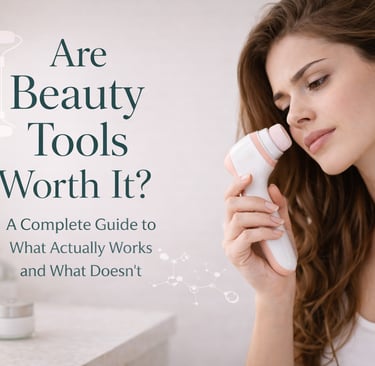
2. Facial Cleansing Brushes: Helpful or Harmful?
Facial cleansing brushes are among the most popular beauty tools, but also one of the most commonly misused.
How They Work
Cleansing brushes use manual or gentle vibrations to help remove dirt, oil, and residue from the skin’s surface.
Potential Benefits
More thorough removal of makeup and sunscreen
Mild exfoliation
Improved skin texture over time
Potential Risks
Over-exfoliation
Skin barrier damage
Increased sensitivity or breakouts
Best Practices
Use gentle pressure
Limit use to 2–3 times per week for sensitive skin
Clean the brush regularly
Bottom line:
Cleansing brushes can be beneficial, but only when used gently and sparingly.
3. Facial Rollers and Gua Sha Tools
Rollers and gua sha tools have become staples in many routines, often associated with lymphatic drainage and relaxation.
What They Actually Do
Temporarily reduce puffiness
Encourage light lymphatic movement
Improve product spread
Promote relaxation
What They Don’t Do
Permanently sculpt the face
Replace professional treatments
Change bone structure
Who They’re Best For
Morning puffiness
Tension relief
People who enjoy hands-on self-care
These tools are safe for most people when used gently with a slip agent like oil or serum.
4. Ice Rollers and Cooling Tools
Cooling tools focus on temperature rather than mechanical action.
Benefits of Cold Therapy
Reduces inflammation
Calms redness
Temporarily tightens appearance of pores
Refreshes tired skin
When to Use Them
Morning routines
After exfoliation
During irritation or puffiness
Cooling effects are temporary but can be very soothing and beneficial as part of a routine.
5. LED Light Therapy Devices
LED devices have gained popularity due to their use in professional settings.
Common LED Colors and Uses
Red light: Supports collagen production
Blue light: Targets acne-causing bacteria
Amber light: Calms inflammation
What Research Suggests
LED therapy can support skin health over time when used consistently, but results are gradual and subtle.
Important Considerations
Consistency matters more than intensity
Results take weeks or months
Eye protection is important
LED devices are most effective as supportive treatments, not standalone solutions.
6. Microcurrent and Electrical Devices
Microcurrent tools use low-level electrical currents to stimulate facial muscles.
Potential Benefits
Temporary lifting effect
Improved muscle tone appearance
Enhanced circulation
Limitations
Results are not permanent
Requires frequent use
Improper use can cause discomfort
These devices are best suited for users who are consistent and cautious.
7. Overuse: The Biggest Beauty Tool Mistake
One of the most common issues with beauty tools is overuse.
Signs You’re Overdoing It
Increased redness
Breakouts
Sensitivity
Tight or shiny skin
Why Overuse Happens
Desire for faster results
Combining too many tools
Following aggressive online routines
Using fewer tools correctly is more effective than using many tools excessively.
8. Who Benefits Most From Beauty Tools?
Beauty tools are not essential for everyone.
Ideal Candidates
People with consistent routines
Those seeking incremental improvements
Individuals who enjoy structured self-care
Who Can Skip Them
People with highly sensitive or compromised skin
Those expecting dramatic overnight changes
Anyone struggling with basic routine consistency
Mastering fundamentals comes first.
9. How to Safely Introduce Beauty Tools
If you decide to try beauty tools, introduction matters.
Safe Introduction Steps
Start with one tool
Use it 1–2 times per week
Monitor skin response
Adjust frequency gradually
Listening to your skin is more important than following trends.
10. Setting Realistic Expectations
Beauty tools work best when expectations are realistic.
What to Expect
Improved skin feel
Reduced puffiness
Better product application
Relaxation benefits
What Not to Expect
Instant transformation
Permanent changes
Replacement for skincare products
Consistency always outweighs novelty.
Final Thoughts
Beauty tools can be valuable additions to a skincare routine, but they are enhancers, not miracles. When chosen thoughtfully and used correctly, they can support skin health and elevate self-care without causing harm.
The most effective beauty routine is built on knowledge, patience, and consistency — tools simply support the process.