
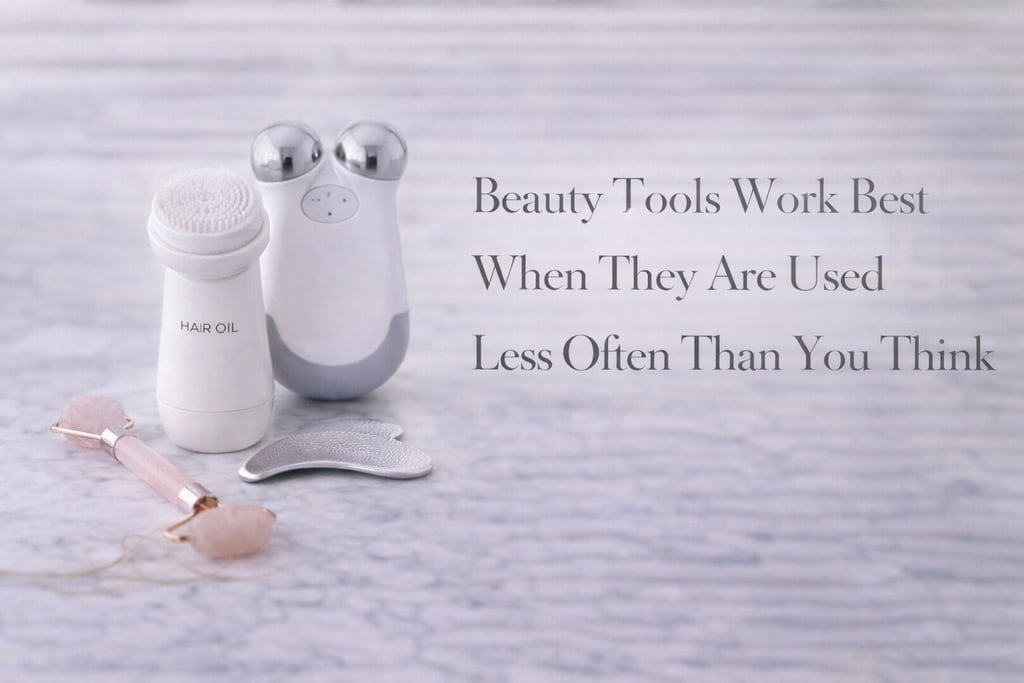
Beauty Tools Work Best When They Are Used Less Often Than You Think
Beauty tools can support skin health when used correctly. This article explains why overuse causes irritation and how restraint improves results.
BEAUTY TOOLS & DEVICES
1/10/20262 min read
Why beauty tools feel tempting to overuse
Beauty tools promise visible improvement through action. Rolling, cleansing, massaging, or using devices feels productive.
This leads many people to believe frequent use equals better results.
In reality, skin responds better to moderation. Tools add stimulation. Too much stimulation overwhelms the skin instead of helping it.
Restraint often produces better outcomes than effort.
What beauty tools are designed to support
Beauty tools are meant to assist basic skincare.
They can help products spread evenly. They can reduce temporary puffiness. They can improve comfort and awareness during routines.
They are not designed to force change or replace skincare fundamentals.
When tools are treated as support rather than solutions, they fit into routines more naturally.
Overstimulation weakens the skin barrier
Every time a tool touches the skin, it creates friction or pressure.
Used too often, this disrupts the skin barrier.
Barrier damage increases water loss and sensitivity. Products that once felt fine begin to sting.
Irritation builds slowly and often appears days after overuse.
Cleansing tools and stripping
Cleansing tools are commonly overused.
Daily mechanical cleansing removes protective oils and disrupts balance.
Skin does not need scrubbing to stay clean. Gentle contact is enough.
Reducing frequency often improves clarity and comfort.
Facial massage tools and pressure problems
Massage tools feel soothing, but pressure matters.
Pushing harder does not improve results. It compresses tissue and irritates blood vessels.
Gentle movements support circulation without stressing the skin.
Comfort is the best indicator of proper use.
Exfoliating devices and cumulative damage
Exfoliating tools increase cell turnover.
When combined with exfoliating products, damage accumulates quickly.
Skin becomes thin, reactive, and prone to breakouts.
Limiting exfoliation allows the skin time to rebuild strength.
Cooling tools and expectations
Cooling tools provide temporary relief.
They reduce puffiness and redness for short periods.
They do not change skin structure or treat underlying issues.
These tools work best as comfort aids, not correction methods.
Light based devices and patience
Devices that use light or microcurrent work gradually.
Results depend on consistency and moderation.
Increasing session length or frequency does not speed progress.
It increases sensitivity.
Following recommended use protects the skin.
Sensitive skin and lower tolerance
Sensitive skin has a lower threshold for stimulation.
Even gentle tools can cause flare ups when skin is compromised.
Introducing one tool at a time helps identify tolerance.
Skipping tools during irritation supports recovery.
Combining multiple tools increases risk
Using several tools in one routine adds overlapping stimulation.
Skin struggles to recover between sessions.
Reducing tool use simplifies routines and lowers irritation risk.
Simple routines are easier to maintain.
Why rest days matter
Skin improves during recovery.
Rest days allow the barrier to repair and inflammation to settle.
Using tools every day removes this recovery window.
Improvement often appears when use is reduced.
Signs that tool use is too much
Lingering redness, increased sensitivity, breakouts, or tightness signal overstimulation.
These signs often appear gradually.
Pausing early prevents long term damage.
Listening to skin matters more than schedules.
How to reintroduce tools safely
When skin feels calm, tools can be reintroduced slowly.
Once or twice per week is often enough.
Monitoring response over several days helps guide frequency.
Progress should feel steady, not forced.
Who benefits most from beauty tools
People with stable skin and consistent routines benefit most.
Those expecting fast change often feel disappointed.
Tools reward patience and moderation.
Realistic outcomes improve satisfaction
Beauty tools enhance comfort and routine enjoyment.
They do not replace sunscreen, moisturizer, or cleanser.
Accepting their role prevents misuse.
Final thoughts
Beauty tools work best when used sparingly.
Overuse creates irritation. Moderation supports balance.
When tools are used with restraint, skin health improves quietly over time.