
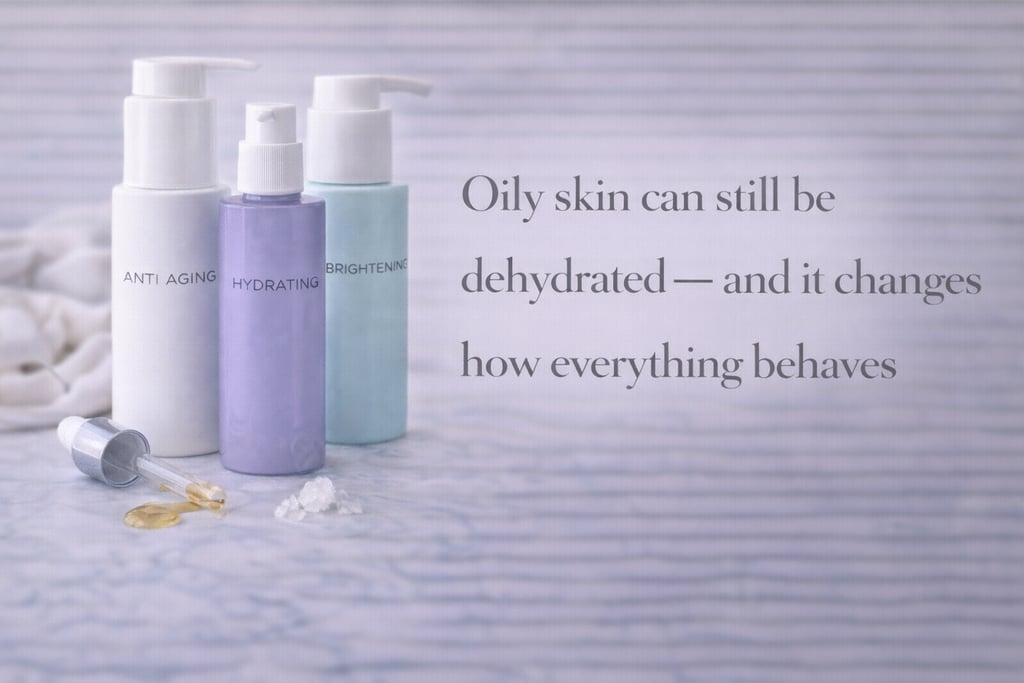
Oily skin can still be dehydrated, and it changes how everything behaves
Oily skin can still be dehydrated. Learn the signs, what causes it, and how to fix dehydration without triggering more oil, breakouts, or irritation.
SKINCARE DEALS
1/10/20263 min read
What “dehydrated” means, and why it matters
Dehydrated skin is a condition where the skin is low on water. Dry skin is a skin type that tends to produce less oil. Those are different problems that can overlap.
Why the mix happens
Sebum is oil. Hydration is water. They are not interchangeable.
When the barrier is stressed, water escapes more easily through transepidermal water loss, or TEWL. TEWL is commonly used as a proxy for barrier function.
Skin can increase surface oil while still losing water. The surface looks shiny, but the deeper layers feel tight or rough.
Fast self check
Signs that point to oily but dehydrated skin
Skin feels tight after cleansing but looks shiny by midday
Makeup separates, pills, or clings to dry patches
Fine lines look worse when skin is bare
You get both congestion and flaking
Products sting more than they used to, especially “actives”
Dehydration is often driven by external factors like overwashing, hot water, and overuse of strong treatments, rather than genetics alone.
Why “oil control” routines often backfire
The most common pattern
Strong cleanser plus frequent exfoliation
Lightweight gel moisturizer or none
Spot treatments stacked
Skin feels clean for an hour
Then more shine, more texture, more sensitivity
What is happening under the hood
The barrier becomes less efficient at holding water
TEWL increases when barrier function is impaired
Irritation can push skin into a cycle of inflammation and uneven shedding
That can look like acne, roughness, and stubborn clogged pores
The role of the skin barrier
Barrier health is not a vague concept. It is practical.
What a compromised barrier tends to do
Lose water faster
React more easily to acids, retinoids, fragrance, and strong surfactants
Feel both oily and tight
Break out more easily because irritated skin sheds unevenly
Main causes that create oily dehydrated skin
Cleansing habits
Cleansing too often
Using high foam or “squeaky clean” formulas
Hot water and long showers
Exfoliation and treatment overload
Layering multiple actives with similar effects
Using scrubs or exfoliating tools too frequently
Increasing retinoid or acid frequency before the skin adjusts
Environment
Air conditioning and indoor heating lowering humidity
High UV exposure and heat
Wind and frequent outdoor activity
Challenging a popular idea
“My skin is oily, so I should avoid moisturizer”
Avoiding moisturizer often increases the tight and shiny pattern. Hydration support helps the skin behave more normally.
A better framing
Oily skin still needs water support
The goal is not to remove oil
The goal is to reduce stress so oil regulation stabilizes
A practical fix plan that is hard to mess up
Step 1 — stop stripping
Use one gentle cleanse at night
In the morning, rinse or use a very mild cleanser if needed
Use lukewarm water
Step 2 — add water plus barrier support
Look for products that do two jobs
Humectants that help hold water in the upper layers
Barrier supportive ingredients that reduce water loss over time
Examples of ingredient types that usually fit this job
Glycerin
Hyaluronic acid
Ceramides
Dermatology education sources commonly separate “dry” from “dehydrated” and point toward barrier support strategies when water loss is the driver.
Step 3 — scale back actives until sting stops
Pause acids for a short period if your skin stings easily
Reduce retinoid frequency
Reintroduce slowly once skin feels calm again
Step 4 — sunscreen becomes non negotiable
UV exposure worsens barrier stress and dehydration signals.
Use enough
Laboratory SPF testing assumes about 2 mg per cm² application
Underapplying is a major reason people think sunscreen “does not work”
Example routine for oily dehydrated skin
Morning
Gentle cleanse or rinse
Lightweight hydrating layer
Moisturizer if skin feels tight
Sunscreen with adequate amount
Night
Gentle cleanse
Hydrating layer
Barrier supportive moisturizer
Active only on a schedule your skin tolerates
How long changes should take
What improves first
Less tightness after cleansing
Less random stinging
More even product absorption
What takes longer
Less midday shine
Fewer clogged pores
Smoother texture
Barrier recovery is usually a weeks not days process when dehydration is tied to irritation and TEWL.
Common mistakes to avoid
Trying to fix dehydration by adding heavy oils while still stripping with cleanser
Adding more actives to fight texture that is caused by irritation
Switching products every few days
Using exfoliating tools on already reactive skin
FAQs
Can oily skin be dehydrated
Yes. Oil and water are different. Oily skin can still lose water through increased TEWL when the barrier is stressed.
What is the difference between dry skin and dehydrated skin
Dry skin is a type associated with lower oil production. Dehydrated skin is a condition linked to low water content and often external factors.
Why is my face oily but tight after cleansing
Tightness after cleansing often points to barrier disruption from stripping cleansers or over cleansing, while the shine can come from sebum and compensatory behavior.
Does sunscreen help dehydration
Sunscreen supports barrier stability by reducing UV driven stress. Using the correct amount matters because underapplication reduces protection.
Key takeaways
Oily can still be dehydrated because oil is not water
TEWL rises when barrier function is impaired
Most fixes come from less stripping, fewer actives, and consistent hydration support
Sunscreen amount matters for real protection