
The Real Reason Your Skin Keeps Reacting Even When You Use Gentle Products
Sensitive skin reactions are common even with gentle products. This article explains why skin reacts and how to calm and protect it over time.
SKINCARE DEALS
1/8/20263 min read
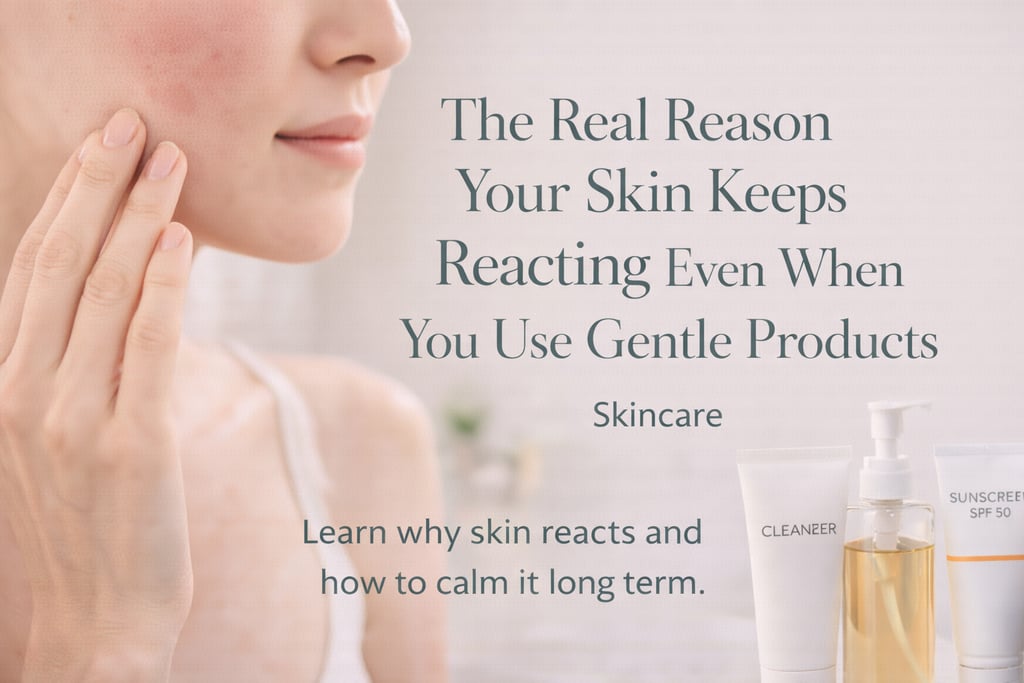

Why skin reactions keep happening
Skin reactions are frustrating. You switch to gentle products. You avoid fragrance. You simplify your routine. And your skin still stings, breaks out, or feels irritated.
This usually does not mean your skin is broken. In most cases, it means your skin barrier is struggling.
Many skin reactions are not caused by one bad product. They happen when the outer layer of the skin is weak and cannot protect itself. Once that protection is compromised, even mild products can trigger discomfort.
Understanding this stops the cycle of guessing and constant product changes.
What the skin barrier actually does
The skin barrier is the outermost layer of your skin. Its job is simple. It keeps moisture inside and blocks irritants from entering.
When the barrier is healthy, the skin feels calm and steady. When it is damaged, the skin becomes reactive.
Water escapes too quickly. Irritants pass through more easily. This leads to redness, itching, stinging, and breakouts.
Sensitive skin is often not a permanent skin type. It is usually a temporary condition caused by barrier damage.
Why gentle products can still irritate the skin
Gentle products only feel gentle when the skin barrier is intact.
When the barrier is damaged, the skin reacts to almost everything. Even products designed for sensitive skin can sting. Even plain water can feel uncomfortable.
This is why switching products over and over rarely solves the problem. The issue is not the formula. It is the condition of the skin.
How overcleansing weakens the skin
Cleansing too often removes the natural oils that protect the skin. Even mild cleansers can cause damage when used too frequently.
Many people cleanse in the morning and at night. Some also cleanse after sweating. Over time, this strips the skin and increases sensitivity.
Skin does not need to feel tight to be clean. A comfortable feeling after cleansing is a better sign of balance.
Exfoliation as a hidden trigger
Exfoliation is useful when done carefully. It becomes a problem when used too often or combined with other active products.
When the barrier is already weak, exfoliation increases irritation instead of improving texture. Redness becomes more noticeable. Breakouts appear more often.
Exfoliation should support skin renewal, not force it.
When too many products overwhelm the skin
Using multiple products at once adds pressure to the skin barrier. Each layer requires the skin to adjust.
When serums, toners, treatments, and actives are layered together, the skin struggles to adapt. Reactions often show up later and feel random.
Simpler routines give the skin space to recover.
Why sunscreen reactions are often misunderstood
Many people believe sunscreen causes their sensitivity. In reality, sunscreen often exposes an existing problem.
When the barrier is compromised, sunscreen can sting or burn. This does not mean sunscreen is harmful. It means the skin needs repair.
Avoiding sunscreen allows sun damage to continue, which further weakens the barrier and increases inflammation.
The role stress plays in skin sensitivity
Stress affects the skin more than most people expect. It increases inflammation and slows repair.
High stress levels can make reactions last longer and feel harder to control. Skin health reflects what is happening internally.
Supporting overall balance helps the skin recover.
How to calm reactive skin over time
Calming reactive skin means reducing stimulation. The goal is not to treat symptoms. The goal is to restore balance.
Fewer products help. Fewer active ingredients help. Fewer routine changes help.
Consistency allows the barrier to repair itself naturally.
Why frequent product changes slow healing
Each new product forces the skin to adapt again. When changes happen too often, the skin never settles.
This creates frustration. People stop trusting their skin and assume nothing works.
Stability builds resilience.
Healing is slow but predictable
Barrier repair takes time. It often takes several weeks before the skin feels normal again.
This can be uncomfortable emotionally. Many people panic and add more products. That usually slows recovery.
Giving the skin time is part of healing.
Reactive skin does not mean weak skin
Skin that reacts is not failing. It is responding to stress.
Once the barrier recovers, the same skin often becomes more stable and more tolerant than before.
Listening to skin signals changes the outcome.
Final thoughts
Most skin reactions are not a mystery. They are signs of imbalance.
Gentle products alone do not fix a damaged barrier. Patience, simplicity, and consistency do.
When the skin barrier is respected, the skin usually returns to calm.