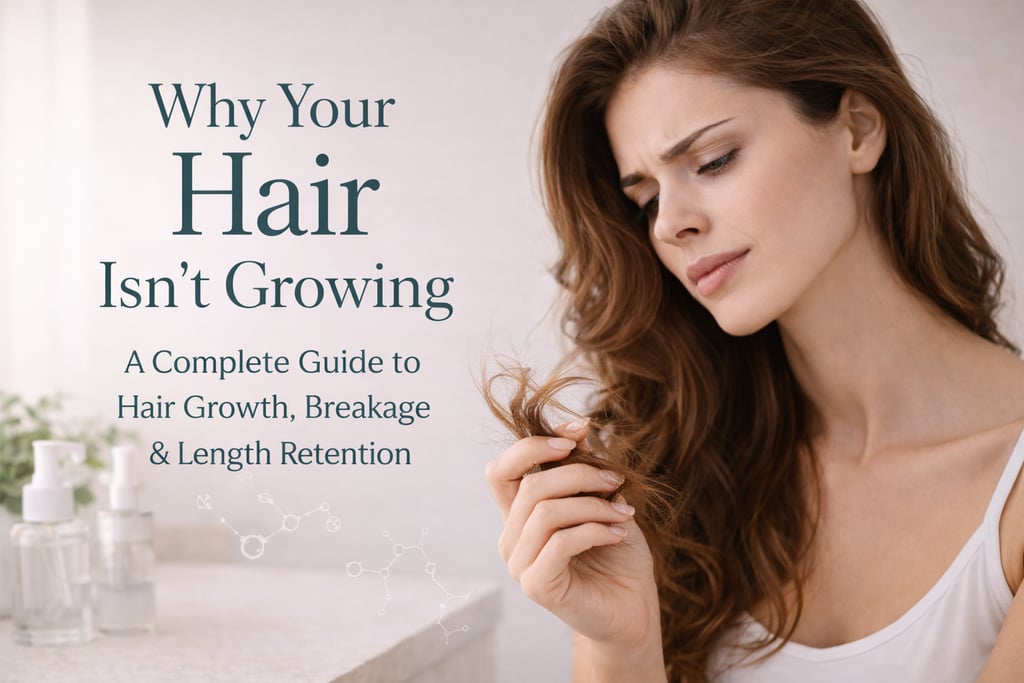
Why Your Hair Isn’t Growing: A Complete Guide to Hair Growth, Breakage & Length Retention
Struggling with hair growth? Learn the real reasons hair appears not to grow, how breakage affects length, and what actually supports healthy hair growth.
HAIR GROWTH SOLUTIONS
1/7/20263 min read
Introduction
One of the most common frustrations in hair care is feeling like your hair simply refuses to grow. You oil your scalp, try protective styles, massage regularly, and still feel stuck at the same length year after year. This experience leads many people to believe their hair has “stopped growing.”
In reality, hair almost never stops growing entirely. What most people experience is breakage, poor length retention, or scalp conditions that slow visible progress. Understanding how hair growth works—and what interferes with it—is essential to making real, lasting improvements.
This guide explains why hair growth feels slow, the difference between growth and retention, and how to support healthier, longer hair over time.
1. How Hair Growth Actually Works
Hair grows in cycles, not continuously.
The Hair Growth Cycle
Anagen Phase (Growth Phase)
This is when hair actively grows from the follicle. It can last anywhere from 2 to 7 years, depending on genetics.
Longer anagen phase = longer potential hair length
Shorter anagen phase = hair reaches terminal length sooner
Catagen Phase (Transition Phase)
A short phase lasting a few weeks where hair stops growing and detaches from the blood supply.
Telogen Phase (Resting & Shedding Phase)
Hair rests, then sheds naturally to make room for new growth.
Key takeaway:
Everyone loses hair daily. This is normal and necessary for new growth.
2. Growth vs Length Retention (The Missing Link)
Most people focus only on growth, but retaining length is what actually makes hair appear longer.
Why Hair “Doesn’t Grow”
Hair grows at the scalp
Breakage happens at the ends
If breakage equals growth, length stays the same
Common Causes of Breakage
Excessive heat styling
Dryness and lack of moisture
Tight hairstyles
Mechanical damage (rough brushing, towel drying)
Supporting length retention is just as important as stimulating growth.
3. Scalp Health: The Foundation of Hair Growth
Healthy hair starts with a healthy scalp.
Signs of an Unhealthy Scalp
Itching
Flaking
Buildup
Tenderness
Excess oil or dryness
When follicles are clogged or inflamed, hair growth can slow or weaken.
Supporting Scalp Health
Regular but gentle cleansing
Scalp massages to improve circulation
Avoiding heavy buildup from styling products
Keeping the scalp moisturized, not greasy
A balanced scalp environment supports stronger, more resilient growth.
4. Why Hair Oils Alone Don’t Grow Hair
Hair oils are widely marketed as growth solutions, but they don’t directly cause hair to grow.
What Oils Actually Do
Seal moisture into strands
Reduce breakage
Improve scalp comfort
Protect ends from friction
What Oils Don’t Do
Change genetics
Override growth cycles
Fix damage from heat or tension
Oils support hair growth indirectly by protecting hair, not accelerating growth speed.
5. Heat Styling and Hair Growth
Heat is one of the biggest contributors to breakage.
How Heat Affects Hair
Weakens protein bonds
Dries out hair strands
Causes split ends
Leads to thinning over time
Smart Heat Practices
Limit heat usage
Use heat protectant
Avoid high temperatures
Focus heat on mid-lengths, not ends
Reducing heat alone can significantly improve length retention.
6. Hairstyles That Slow Growth
Tension-based styles can damage hair follicles over time.
High-Risk Styles
Tight ponytails
Braids with excessive tension
Heavy extensions
Styles pulling on edges
Healthier Styling Choices
Loose protective styles
Low manipulation styles
Alternating hairstyles
Giving edges regular breaks
Comfort should always come before appearance.
7. The Role of Moisture & Protein Balance
Hair thrives on balance—not extremes.
Signs of Moisture Deficiency
Brittleness
Dullness
Excessive breakage
Signs of Too Much Protein
Hard, stiff hair
Snapping strands
Loss of flexibility
Maintaining Balance
Moisturize regularly
Use protein treatments sparingly
Pay attention to how hair feels, not trends
Balanced hair is stronger and more resilient.
8. Nutrition & Hair Growth
Hair growth is influenced by internal health.
Nutrients That Support Hair
Protein
Iron
Zinc
Vitamins A, C, D, E
Omega fatty acids
Common Issues
Crash dieting
Low protein intake
Dehydration
Chronic stress
Hair health reflects overall wellness.
9. Stress, Hormones & Growth Disruptions
Stress can push hair into the shedding phase prematurely.
Stress-Related Hair Issues
Increased shedding
Thinning
Breakage
Managing Stress for Hair Health
Consistent sleep
Gentle routines
Avoiding excessive manipulation
Patience during recovery phases
Hair regrowth after stress often takes months, not weeks.
10. Why Growth Takes Time (and What to Expect)
Hair grows on average ½ inch per month. This means:
6 inches per year is normal
Faster growth claims are often exaggerated
Visible progress takes consistency
Small improvements compound over time.
Final Thoughts
Hair growth is not about finding a miracle product — it’s about supporting the natural growth process while protecting what you already have.
When you focus on scalp health, moisture balance, gentle handling, and lifestyle factors, growth becomes predictable and sustainable.
Healthy hair growth is quiet, gradual, and incredibly rewarding.