
Why Your Hair Keeps Breaking Even When You Take Care of It
Hair breakage is often mistaken for slow growth. This article explains why hair keeps breaking and how to protect length over time.
HAIR GROWTH SOLUTIONS
1/8/20263 min read
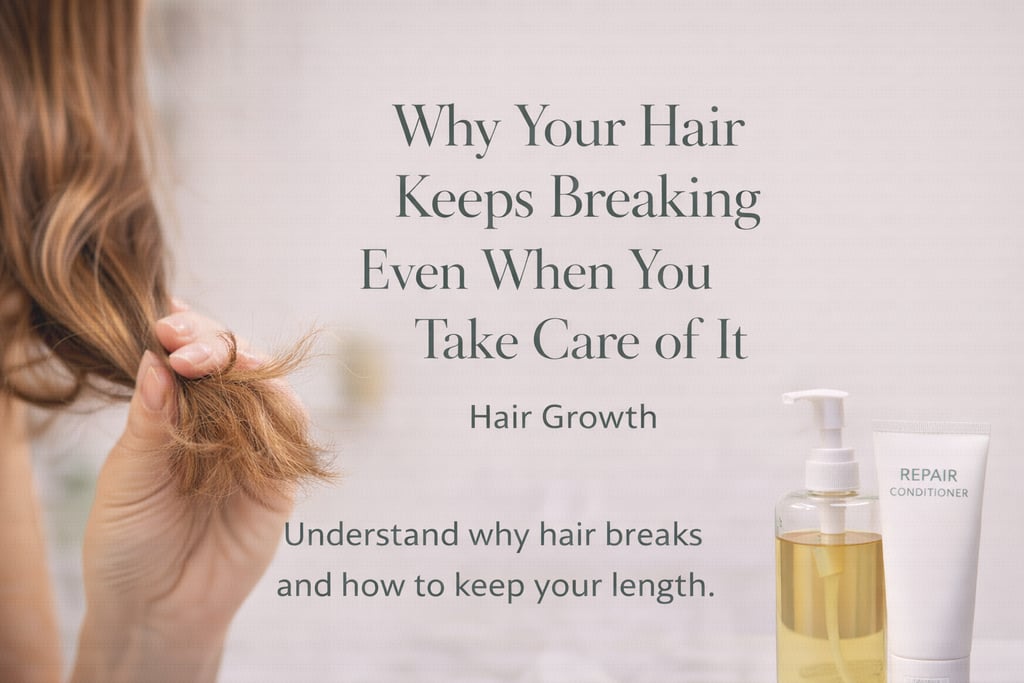
Why hair breakage feels like lack of growth
Many people believe their hair is not growing. They oil their scalp. They use treatments. They stay consistent. Yet the length never seems to change.
In most cases, the hair is growing. The problem is breakage.
When breakage happens at the same rate as growth, length stays the same. This makes it feel like progress has stopped, even though the follicles are active.
Understanding this difference changes how hair care should be approached.
Growth and retention are not the same thing
Hair growth happens at the scalp. Length retention happens at the ends.
Growth depends mostly on genetics and overall health. Retention depends on how hair is handled day to day.
Many routines focus on growth products while ignoring the habits that cause damage. Without protecting length, growth goes unnoticed.
Dryness is one of the biggest causes of breakage
Dry hair breaks easily. When hair lacks moisture, it loses flexibility. Instead of bending, it snaps.
Dryness often comes from overwashing, harsh shampoos, heat styling, or lack of conditioning.
Moisture does not mean greasy. It means the hair strands can move and stretch without breaking.
Overmanipulation weakens the hair shaft
Hair does not like constant handling. Styling, brushing, detangling, and reshaping all create friction.
Even gentle manipulation adds up when done daily.
Hair that is left alone more often usually retains length better than hair that is styled constantly.
Low manipulation does not mean neglect. It means intentional care.
Heat damage is often underestimated
Heat changes the structure of the hair. It weakens protein bonds and removes internal moisture.
Even with heat protectants, frequent heat styling causes cumulative damage over time.
Hair may look smooth at first. Breakage often appears weeks later.
Reducing heat frequency can dramatically improve retention.
Tension damages hair slowly
Tight styles place constant stress on the hair shaft and follicles. This stress builds gradually.
Braids, ponytails, extensions, and slick styles can weaken hair over time, especially around the hairline.
Comfort matters. If a style feels tight, the hair is being stressed.
The ends of the hair need special attention
Hair ends are the oldest and weakest part of the strand. They have experienced years of wear.
Ends break first when neglected.
Protecting the ends is key to keeping length. This includes gentle detangling, regular conditioning, and trimming when necessary.
Trimming does not slow growth. It prevents small splits from turning into major breakage.
Scalp care supports stronger growth
While breakage happens at the ends, growth begins at the scalp.
A healthy scalp supports strong hair strands from the start.
Scalp buildup, dryness, and inflammation can weaken new growth. Gentle cleansing and occasional massage help maintain balance.
The scalp does not need heavy oils to function well.
Nutrition plays a quiet role
Hair reflects overall health. Poor nutrition can lead to weaker strands that break easily.
Protein, iron, zinc, and hydration all support hair strength.
Hair care products cannot replace internal support.
Stress affects hair strength
Stress can push hair into shedding phases and weaken new growth.
During stressful periods, hair may feel thinner or more fragile.
This is usually temporary. Gentle care during these times prevents additional damage.
Why constant product switching causes problems
Switching products frequently makes it hard to understand what actually works.
Hair needs time to respond to a routine. Frequent changes disrupt balance and can worsen dryness or buildup.
Consistency matters more than novelty.
How to protect length over time
Protecting hair length is not about forcing growth. It is about reducing damage.
Gentle handling, moisture balance, low tension styles, and patience create steady progress.
Hair grows quietly. Protection allows that growth to show.
What realistic progress looks like
Hair grows at an average rate of about half an inch per month.
This means visible change takes time. Small improvements compound slowly.
Tracking progress over months instead of weeks helps keep expectations realistic.
Final thoughts
Most hair growth frustration comes from breakage, not slow follicles.
Focusing on length retention changes everything. When damage is reduced, growth becomes visible without extreme effort.
Healthy hair care is not aggressive. It is consistent, gentle, and patient.